Home buying guide

What Are the Costs of Owning a Home? Plan Before You Buy

เจ้าของบ้านกำลังวางแผนค่าใช้จ่ายสำหรับการดูแลบ้าน
Table of Contents

    Article Categories

    The cost of owning a home does not end with the purchase price or the start of your mortgage payments. Once you move in, there are ongoing household expenses, maintenance costs, and occasional expenses to consider. Planning around the purchase price alone may therefore underestimate the true cost of homeownership. If you are buying a home to live in, considering these long-term costs before making a decision can help you determine whether the property is suitable for your family’s financial situation.

    Utilities Are an Ongoing Expense

    Electricity, water, and other household services are basic recurring expenses. The actual amount will depend on the number of residents, the size of the home, the appliances you use, and your household’s daily habits.

    Rather than relying on a fixed estimate, set aside a budget based on your family’s lifestyle and monitor your actual expenses during the first few months after moving in. You can then adjust your monthly budget accordingly.

    If you use additional services such as internet, private security systems, or property maintenance services, these should also be included in your regular household expenses.

    Set Aside a Budget for Maintenance and Repairs

    Every home has components that naturally wear over time and through regular use, including paintwork, roofing, doors, windows, electrical systems, plumbing, air-conditioning systems, and outdoor areas.

    For this reason, home maintenance costs should not be treated as expenses that only arise when something goes wrong. Setting aside funds for routine maintenance and repairs can help reduce the financial impact of unexpected work that falls outside your normal monthly budget.

    Larger homes may also have more areas and systems to maintain, so these costs should be assessed based on the actual characteristics of the property rather than the purchase price alone.

    Check Common Fees Before Buying

    If you are buying a home within a residential development, ask whether common fees apply, how they are calculated, and which areas or services they cover.

    These costs vary between developments, so the fees charged by one project should not automatically be used to estimate the costs of another. If a development does not charge common fees, you should still check whether there are any expenses or maintenance responsibilities that homeowners are expected to manage themselves.

    Understanding these conditions before purchasing makes it easier to compare the long-term costs of different homes and developments.

    Remember the Expenses That Do Not Occur Every Month

    In addition to regular household expenses, costs after buying a home may include optional insurance, applicable property-related taxes, home improvements, furniture, and the replacement of equipment or appliances when they reach the end of their useful life.

    Some of these expenses may occur once a year, while others may arise only after several years of living in the property. It is therefore useful to keep a separate reserve fund in addition to your regular monthly budget.

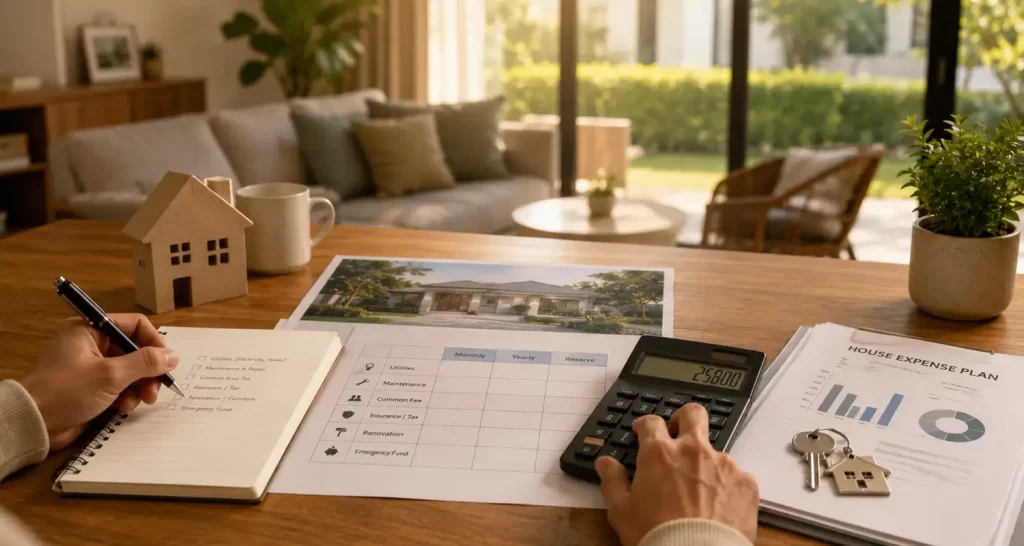
    Before buying a home, consider dividing your expected expenses into three categories: monthly expenses, annual expenses, and a reserve fund for maintenance and repairs. This provides a more complete picture of the true cost of homeownership than looking at mortgage payments alone.

    Summary

    Planning for the cost of owning a home should include utilities, maintenance, common fees where applicable, and savings for occasional or unexpected expenses. Considering these costs in advance can help ensure that the home you choose remains suitable for your long-term budget.

    If you are comparing homes in Pranburi, Yarinda Pranburi Phase 2 comes with zero common fees for life. You can consider this alongside the purchase price, house design, and other ongoing expenses when comparing the long-term cost of living with other properties you are interested in.
    Facebook
    X
    LinkedIn

    Related Articles

    Buying a Home in Pranburi? 5 Things to Compare Before You Decide

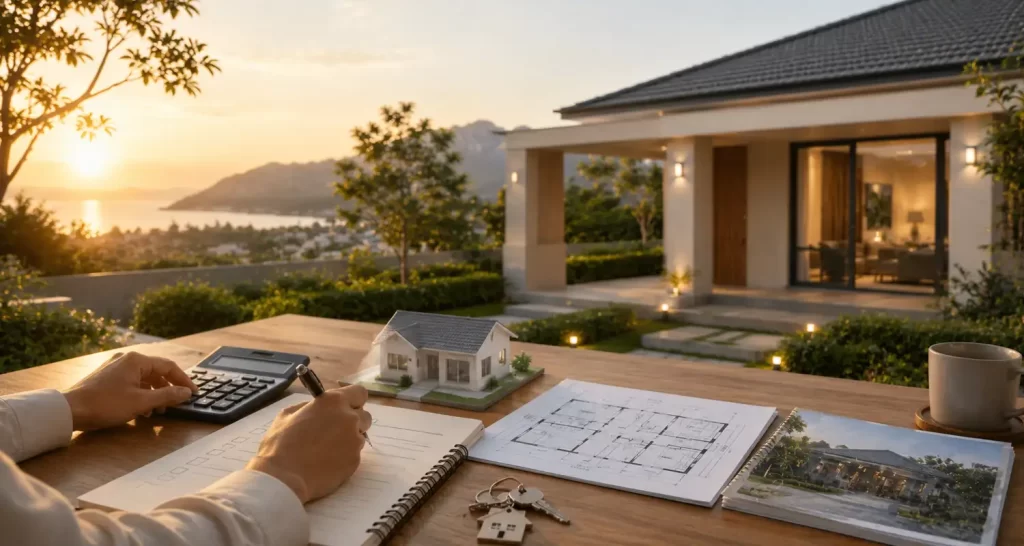
    Searching for a home in Pranburi may begin with price, house design, or location. However, if you are buying a home to live in, several factors should be considered together. The right home for each family is not necessarily the largest or the least expensive option. It should suit your daily routine, budget, and long-term lifestyle. Before making a decision, compare at least five key factors: location, living space, construction quality, project characteristics, and ongoing costs after purchase.

    1. Choose a Location That Fits Your Daily Routine

    When choosing a home in Pranburi, start by considering your family’s daily routine, such as commuting to work, shopping, running errands, and travelling to Hua Hin or other areas if these journeys are part of your regular schedule.

    Visit the house or development in person and try travelling the routes you are likely to use. It is also worth returning on different days and at different times to get a better sense of the surroundings, access roads, traffic, and overall atmosphere.

    The ideal location will therefore be different for everyone. What matters is whether it makes everyday life convenient for you and your family.

    2. Look Beyond the Size of the House

    The number of bedrooms and bathrooms, shared living areas, kitchen, storage space, and parking should correspond to the size of your household and the way you live.

    If you are considering a detached home in Pranburi, look at both the interior space and the area surrounding the house, as well as the time and cost required to maintain these spaces in the future.

    Try imagining your daily routine from the moment you wake up until you return home at the end of the day. This can help you determine whether the layout works well in practice or includes spaces that do not suit your needs.

    3. Examine the Construction Quality

    Beautiful interiors and attractive photographs can make a strong first impression, but for long-term living, the actual construction details are equally important.

    Ask about the materials used and inspect the flooring, walls, doors, windows, electrical systems, plumbing, and finishing details. Before accepting the property, inspect the condition of the home and make sure you understand the process for reporting and correcting any defects that may be found.

    4. Choose a Development That Matches Your Lifestyle

    The number of homes, shared facilities, and the way a development is managed can create very different living experiences.

    Some families may prefer a development with a wide range of facilities, while others may value a smaller community with fewer homes. The right choice should be based on the features you will actually use rather than assuming that a larger or smaller development is automatically better.

    5. Compare More Than Just the Purchase Price

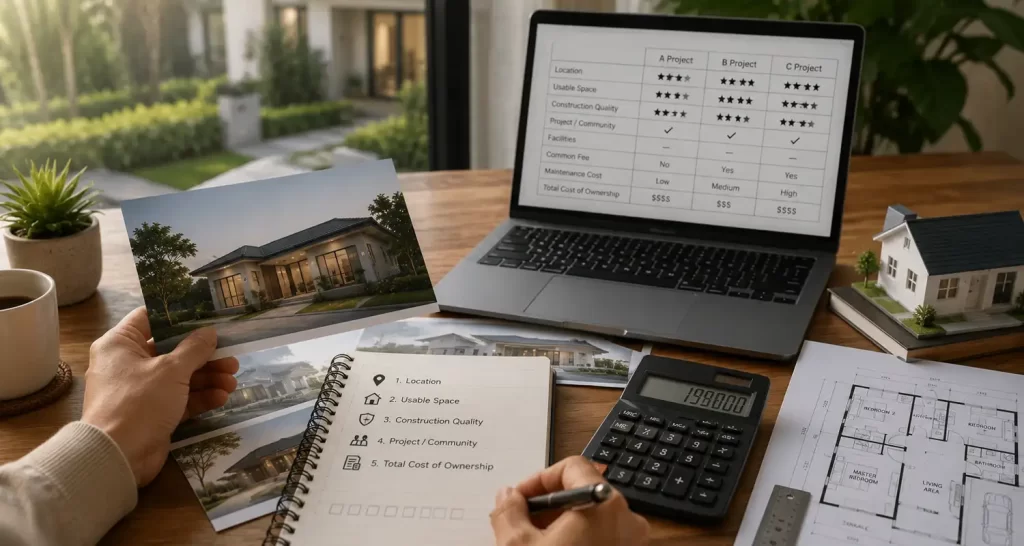
    The purchase price is only one part of the total cost of owning a home. Before choosing a home in Pranburi, consider mortgage payments if financing is required, utilities, maintenance expenses, funds for future repairs, and common fees if the development charges them.

    When comparing different properties, consider these costs alongside the location, house design, and construction quality. This will give you a clearer picture of which option is better suited to your needs over the long term.

    Summary

    Choosing a home in Pranburi for long-term living means considering all five factors together rather than making a decision based on a single feature. If you are comparing several homes, applying the same criteria to each property can make their differences much easier to evaluate.

    For those currently exploring their options, Yarinda Pranburi Phase 2 is a boutique development of just 5 detached homes, each featuring 2 bedrooms, 2 bathrooms, and parking for 2 cars. Prices start from THB 1.99 million, with zero common fees for life. You can explore the project details and compare them with your own lifestyle and housing needs.

    อ่านเพิ่มเติม

    Are Small Residential Developments Right for You? What to Know Before Buying

    A small residential development is one of the options homebuyers may encounter when searching for a property. The most obvious difference is the smaller number of homes compared with larger developments. However, the number of units alone is not enough to determine whether a project is right for you. Buyers should also consider privacy, shared facilities, ongoing costs, project management, and their preferred lifestyle. The goal is to choose what best suits your needs rather than assuming that one project size is better than another.

    The Number of Homes Affects the Atmosphere, but It Is Not Everything

    A development with only a small number of homes may feel different from one with hundreds of units, simply because the number of households and the way residents use the shared spaces can vary considerably.

    However, a smaller development should not automatically be assumed to be quieter or more private. The actual living experience also depends on the site layout, distance between homes, internal roads, and the surrounding environment.

    If privacy is important to you, visit the development in person and consider the position of each home rather than judging the project solely by its total number of units.

    Facilities May Differ from Larger Developments

    If you are considering a small residential development, check which shared spaces and facilities are provided and whether they are relevant to your lifestyle.

    Some larger developments may offer a wide range of communal facilities, while smaller projects may take a simpler approach. The exact features, however, vary from one development to another.

    The key question is therefore not simply, “How many facilities are there?” but whether you will actually use them and whether the associated costs provide reasonable value for what you receive.

    Understand Project Management and Ongoing Costs

    Before choosing a residential development, ask whether common fees apply. If they do, find out how they are calculated and what areas or services those fees cover.

    If there are no common fees, you should also understand which areas or services homeowners are responsible for themselves and how any shared areas are maintained.

    These details are important for long-term living because management arrangements and ongoing costs can vary significantly between developments. Buyers should therefore request clear information directly from the developer before making a decision.

    Is a Small Development Right for Your Lifestyle?

    Choosing a small residential development ultimately comes down to how you want to live. If you prefer a community with fewer homes and do not require extensive communal facilities, this type of development may be worth considering.

    However, if your family wants a wider range of shared activity spaces or communal services, another type of development may be more suitable.

    Beyond the size of the project, you should also consider the location, house design, living space, construction quality, access, and long-term costs, as all of these factors directly affect everyday living.

    Summary

    Small residential developments are not right for everyone, just as larger developments will not suit every family. The key is to understand how much you value privacy, communal facilities, and different approaches to project management, then compare these priorities with the actual features of each development.

    For those considering a home in Pranburi, Yarinda Pranburi Phase 2 features just 5 homes with zero common fees for life. You can explore the project details further and compare them with the lifestyle and living environment you are looking for.

    อ่านเพิ่มเติม

    Buying a Home in Pranburi: What Should You Look For? A Checklist Before You Decide

    When buying a home in Pranburi for long-term living, the process should begin with your own needs rather than simply choosing a development. A home is both a place to live and a long-term financial commitment. Before making a decision, consider your budget, location, house design, construction quality, and ongoing costs after moving in. Having a clear checklist allows you to compare different homes using the same criteria and helps reduce decisions based on first impressions alone.

    Set Your Budget Before You Start Looking

    Before searching for a home, determine a budget that you can realistically afford. Consider not only the purchase price, but also the funds required during the buying process and the expenses that will arise after you move in.

    If you plan to use a home loan, assess your repayment capacity, prepare information about your income and existing debts, and compare loan terms from different financial institutions before making a decision.

    Most importantly, do not base your budget solely on the maximum amount you expect to borrow. Consider whether your monthly repayments and other housing expenses will still leave enough financial flexibility for everyday living.

    Choose a Location Based on Your Actual Daily Routine

    For anyone buying a home in Pranburi, the location should fit the daily routine of everyone in the household.

    Explore the access routes yourself. If you regularly travel to Hua Hin or other areas, try the journey at times that reflect your actual routine. It is also worth revisiting the area on different days and at different times to observe the surroundings, traffic, accessibility, and level of privacy.

    Rather than simply asking whether a location is near or far, consider whether the journey will remain practical for your lifestyle over the long term.

    Look Beyond the Design and Interior Finishes

    A home that looks attractive during a viewing should also work well for everyday living. Consider whether the number of bedrooms and bathrooms, living areas, kitchen, storage space, and parking are suitable for your household today and for your future plans.

    When assessing construction quality, ask about the materials used and inspect key areas such as floors, walls, doors, windows, electrical systems, and plumbing. Before accepting the property, carry out a thorough inspection and make sure you understand the process for reporting and correcting any defects.

    Compare Long-Term Costs Before Making a Decision

    Another important factor when choosing a home in Pranburi is the ongoing cost of ownership, as the purchase price represents only part of the total cost of living in a home.

    Ask whether the development charges common fees or other recurring costs. You should also budget for utilities, routine maintenance, and future repairs.

    Considering these expenses alongside the purchase price, location, living space, and construction quality will give you a more complete basis for comparing different properties.

    Summary

    Before buying a home, you should be able to answer at least four key questions: Is the budget appropriate for your financial situation? Does the location support your daily routine? Does the home meet the needs of your household? And are the long-term costs manageable?

    If you are comparing homes in Pranburi, you can explore Yarinda Pranburi Phase 2 as one of your options. The development features just 5 detached homes, each with 2 bedrooms, 2 bathrooms, and parking for 2 cars. Prices start from THB 1.99 million, with zero common fees for life.

    อ่านเพิ่มเติม

    How to Choose a Detached Home in Pranburi for Everyday Living

    When looking for a detached home in Pranburi for everyday living, there is more to consider than appearance or size alone. The right home for each family depends on the number of household members, daily routines, travel needs, and long-term maintenance responsibilities. Before making a decision, it is worth comparing living space, location, construction quality, and ongoing costs to ensure that the home works well for everyday life, not just on the day you first view it.

    Start with the Space You Actually Need

    A larger home is not necessarily the right choice for every family. What matters more is whether each part of the home can be used effectively in everyday life.

    Consider whether the number of bedrooms and bathrooms suits your household, along with the living areas, kitchen, storage space, and parking. If you work from home or expect other family members to live with you in the future, these needs should also be considered before purchasing.

    When viewing a property, try imagining your normal daily routine as you move through the house. This can reveal practical limitations in the layout that may not be obvious from floor area figures alone.

    Detached Homes Offer More Privacy, but Require More Maintenance

    One of the characteristics of a detached home is that it stands separately from neighbouring properties, which may appeal to those who value greater personal space. However, having more space can also mean greater maintenance responsibilities.

    If you are considering a detached home in Pranburi, think about long-term maintenance requirements, including the exterior of the house, surrounding outdoor areas, household systems, and repairs that may be required over time.

    Rather than asking only how much space a home provides, consider whether you actually need all of that space and whether maintaining it fits comfortably with your lifestyle.

    Assess Construction Quality Through the Details

    When choosing a home for long-term living, construction quality should be considered just as carefully as the design and interior finishes.

    During a property viewing, inspect the floors, walls, doors, windows, roof, electrical systems, plumbing, and finishing details. If the developer provides material specifications or a list of construction standards, request this information and include it in your evaluation.

    Before accepting the property, carry out a thorough inspection and ask about the process for reporting and correcting any defects so that you clearly understand the conditions before proceeding.

    Consider the Home Together with Its Location and Ongoing Costs

    Even if the house itself meets your needs, everyday living may be less convenient than expected if the location does not suit your daily routine.

    Before buying a detached home in Pranburi, test the access routes, visit the surrounding area at different times of day, and consider the ongoing costs of homeownership, including utilities, maintenance, and common fees if applicable.

    Comparing all of these factors together provides a more complete picture of both the suitability and long-term cost of a home than considering the purchase price alone.

    Summary

    A detached home suited to everyday living should provide the right balance of living space, privacy, location, construction quality, and long-term maintenance responsibilities. Defining your family’s needs before comparing properties can make it easier to identify which options genuinely suit your lifestyle.

    If you are comparing detached homes in Pranburi, you can explore Yarinda Pranburi Phase 2 as one of your options. The development features just 5 detached homes, each with 2 bedrooms, 2 bathrooms, and parking for 2 cars, with prices starting from THB 1.99 million.

    อ่านเพิ่มเติม

    Modern detached homes designed for simple, private living in harmony with nature.


    PRIVATE VIEWING

    Experience Yarinda, In Person

    Choose your preferred date and time, and the Yarinda team will contact you to confirm your visit.

    Designed for Living.

    Experience a home designed for real living, surrounded by the natural beauty of Pranburi.

    For More Information

    089 000 0000
    © 2026 YARINDA PROPERTY || website by dinosofts